
Why Proper VCT Tile Cleaning Is the Key to Long-Lasting Commercial Floors
VCT tile cleaning is one of the most important — and most misunderstood — parts of commercial floor maintenance. Done right, it keeps your floors looking sharp and can extend their lifespan to 20 years or more. Done wrong, it strips the finish, dulls the surface, and leads to costly repairs.
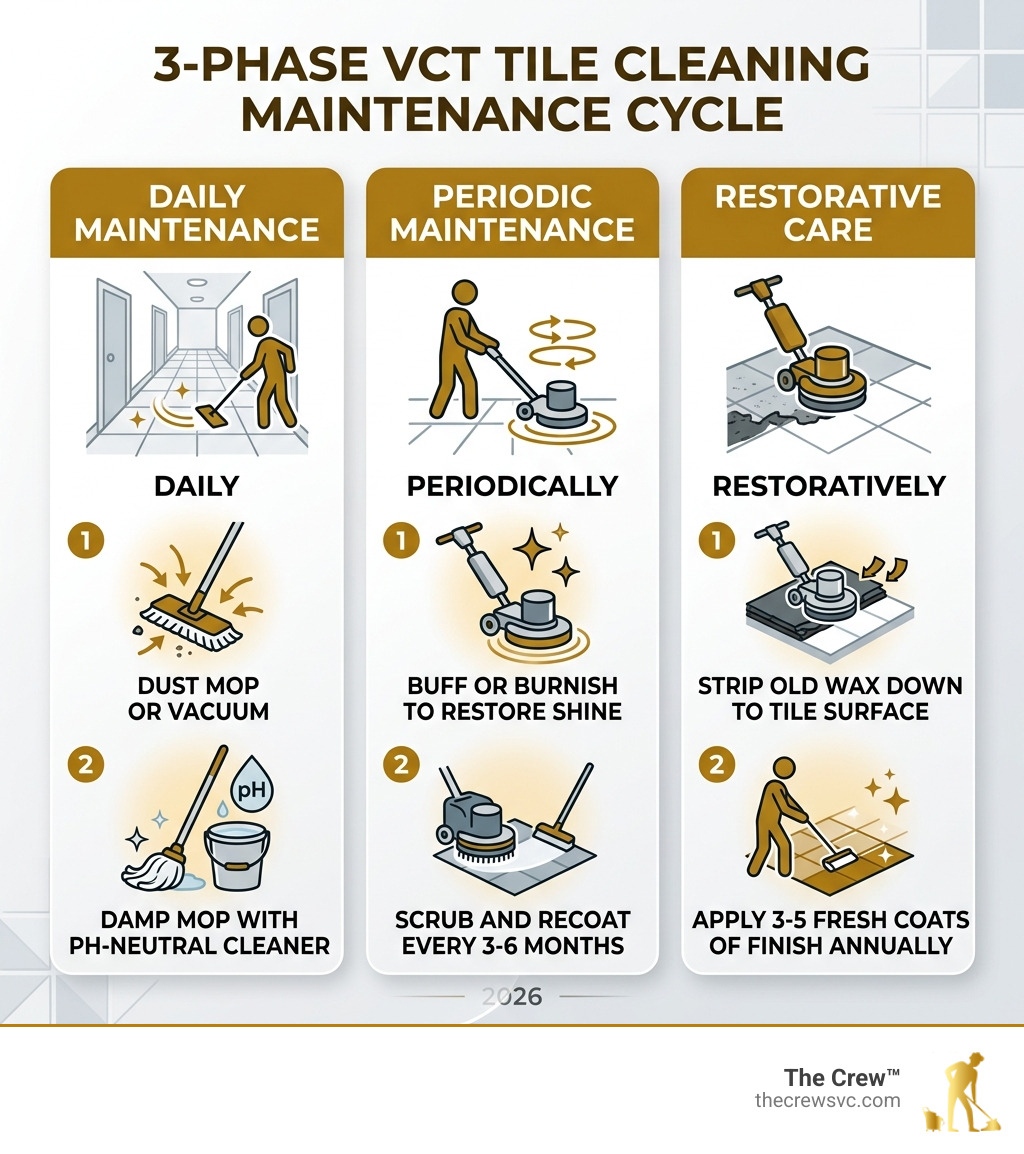
Here’s a quick overview of how to clean VCT floors:
- Daily – Dust mop or vacuum, then damp mop with a pH-neutral cleaner
- Periodically – Buff or burnish to restore shine; scrub and recoat every 3-6 months
- Restoratively – Strip old wax down to the tile surface and apply 3-5 fresh coats of finish annually
VCT (Vinyl Composition Tile) is made from vinyl, limestone, and fillers. It’s durable and affordable, which is why you’ll find it in schools, hospitals, offices, and commercial lobbies across Denver. But its porous surface means it needs a protective finish — and that finish needs regular attention to hold up under heavy foot traffic.
Without a consistent cleaning routine, that finish wears away. What follows is dullness, staining, and a floor that no longer reflects the professionalism of your business.
I’m Carlos Castillo II, owner of The Crew™, a commercial cleaning company serving the Denver Metro Area since 1982. Our team handles VCT tile cleaning in offices, lobbies, and facilities of all sizes — so everything in this guide comes from real-world experience, not theory.
Easy vct tile cleaning glossary:
Understanding VCT and the Three Phases of Maintenance
To master vct tile cleaning, we first have to understand what we are actually cleaning. Vinyl Composition Tile is a mixture of natural limestone, filler materials, thermoplastic binders, and color pigments. While it is incredibly resilient against heavy weight and foot traffic, it has a secret: it is naturally porous.
If you were to look at a raw VCT tile under a microscope, you’d see tiny pits and openings. Without a protective layer of wax or floor finish, dirt and liquid would dive straight into those pores, causing permanent staining. This is why How to Clean VCT Tile always involves managing that top layer of finish.
We view VCT care through three distinct lenses:
- Daily Care: Removing the “grit” that acts like sandpaper on your shine.
- Periodic Maintenance: Refreshing the top layer of wax to keep it smooth and reflective.
- Restorative Cleaning: Hitting the reset button by removing all old, yellowed wax and starting fresh.
When these three phases are balanced, a VCT floor can easily last two decades. Neglect any one of them, and you’ll find yourself looking at a full floor replacement much sooner than April 2046.
The Importance of Routine VCT Tile Cleaning
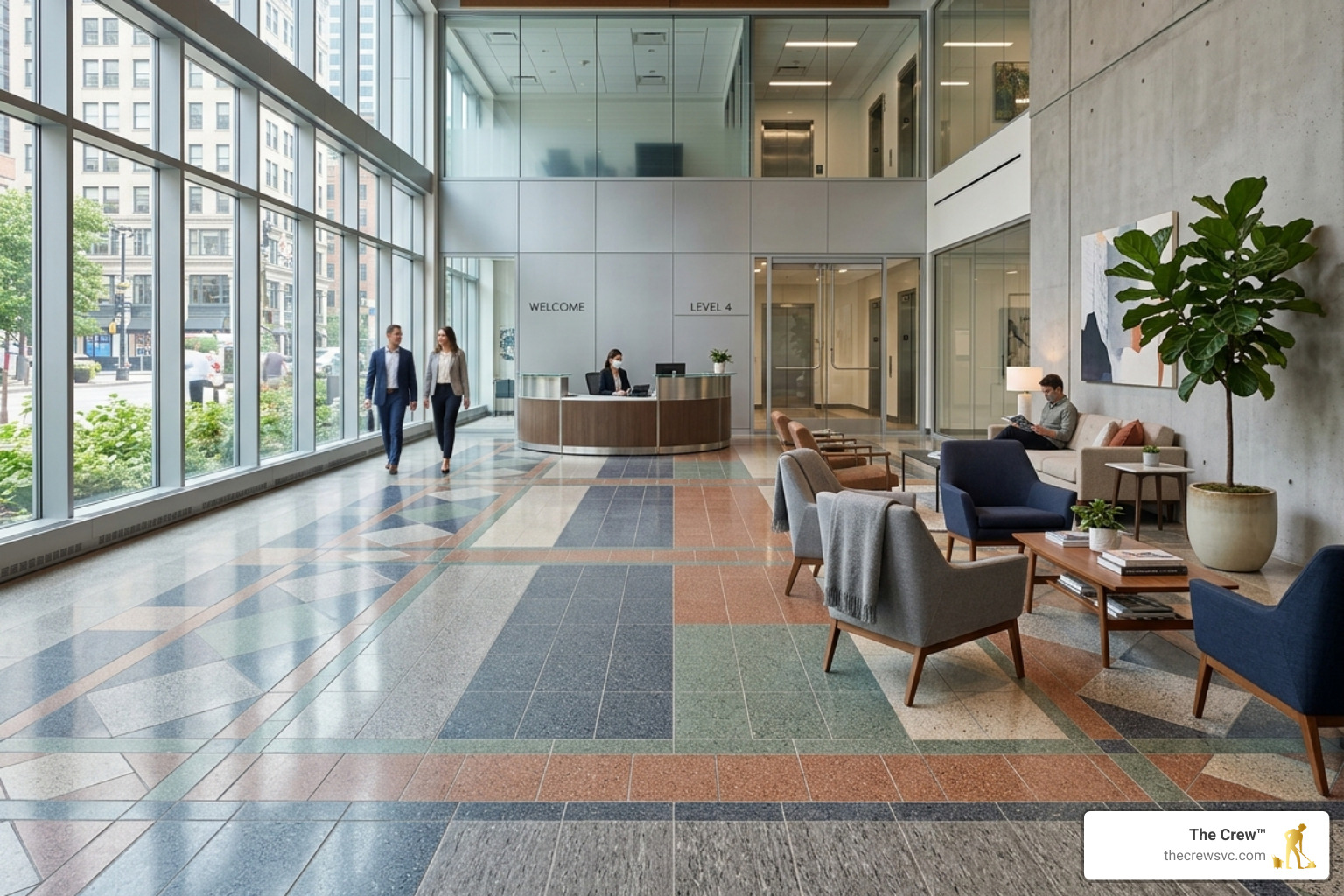
Why obsess over a daily schedule? Because soil is the enemy of the finish. Every person walking into your building carries microscopic rocks and dirt on their shoes. As they walk, they grind that grit into the wax. Routine vct tile cleaning prevents this “sandpaper effect,” preserving the finish and keeping the floor slip-resistant. A clean floor isn’t just about vanity; it’s about safety and protecting your investment.
Identifying Your Floor’s Maintenance Needs
Not every floor needs a full strip and wax today. You can identify your floor’s health by looking for a few key signs:
- High Traffic Lanes: Are there “paths” where the floor looks duller than the corners?
- Scuff Marks: Are black rubber marks sitting on top of the wax or embedded in it?
- Color Shift: Does the wax look yellow or amber? That’s a sign of “wax buildup” that needs restorative care.
Understanding these needs helps you manage your Janitorial Prices effectively, as you won’t pay for restorative work when a simple buffing would suffice.
Daily VCT Tile Cleaning and Preventive Care
The most important tool in our arsenal isn’t a giant machine; it’s the humble vacuum or dust mop. In fact, research shows that battery-powered backpack vacuums can increase worker productivity by as much as 230% compared to traditional uprights. We use these to whisk away the fine dust that mops often just push around.
Best Practices for Daily Damp Mopping
Once the dry debris is gone, it’s time for a damp mop. But don’t just grab a bucket of hot water and some bleach! For professional vct tile cleaning, we follow these rules:
- Use pH-Neutral Cleaners: Harsh chemicals eat the wax. A neutral cleaner (pH 7) removes dirt without harming the shine.
- Cool Water is Key: Hot water can actually soften some finishes or cause the cleaner to streak.
- The Double-Bucket System: One bucket holds your clean solution; the other is for wringing out the dirty water. This ensures you aren’t just mopping with mud.
- The Figure-8 Pattern: This technique keeps the leading edge of the mop forward, trapped dirt in the folds of the microfiber rather than spreading it.
| Feature | Cotton Mops | Microfiber Mops |
|---|---|---|
| Absorbency | High (can be too wet) | Controlled (damp) |
| Durability | Lower | Very High (hundreds of washes) |
| Linting | Leaves “fuzz” behind | Lint-free |
| Bacteria Removal | Average | Superior |
Preventive Measures to Extend Floor Life
The best way to clean a floor is to keep it from getting dirty in the first place. This is where the “15-foot rule” comes in. An effective entryway matting system should provide about 15 feet of matting outside and an additional 15 feet inside. This allows guests to take 8 to 10 steps on the mats, trapping 80-90% of soil before it ever touches your VCT.
We also recommend furniture protectors (felt pads) on all chairs and tables. For more tips on keeping your space pristine, check out our guide on how to Stop Being A Floor Bore With Professional Vinyl Cleaning.
Periodic Maintenance: Scrubbing, Recoating, and Buffing
Eventually, daily mopping isn’t enough to keep that “wet look” shine. This is where periodic maintenance steps in. By using floor polishing services, we can remove light scuffs and scratches without the time and expense of a full strip.
Restoring Shine with VCT Tile Cleaning Buffing Techniques
Spray buffing is a fantastic way to “heal” a floor. We use a floor machine with a red buffing pad and a spray-on technician’s solution.
- The Process: We spray a fine mist and pass over it with the machine in a front-to-back motion.
- The Result: The heat from the pad friction slightly softens the top layer of wax, allowing it to flow into micro-scratches and reset into a smooth, shiny surface.
- Pro Tip: Always do a final vacuum after buffing, as the process can create a small amount of “buffing dust.”
When to Schedule a Scrub and Recoat
If the floor is clean but the shine won’t come back with buffing, you likely need a “Scrub and Recoat.” This involves using a slightly more aggressive green pad to remove the top 1-2 layers of dirty finish. We then rinse the floor and apply two fresh coats of wax. This is typically done every 3-6 months in high-traffic areas. You can find these options under our general services page.
Restorative VCT Tile Cleaning: The Stripping and Waxing Process
This is the “heavy lifting” of vct tile cleaning. Over time, even with perfect maintenance, floor finish will eventually yellow or become deeply embedded with grime. Most manufacturers recommend a full strip once a year. According to this Step-by-Step Guide For A Spotless Shine, the goal is to return the tile to its original, “naked” state.
Step-by-Step Guide to Stripping VCT
- Preparation: Remove all furniture and tape off any carpeted edges or wood baseboards.
- Application: Apply the chemical stripper liberally. It needs “dwell time” (usually 10-15 minutes) to break the bond between the wax and the tile. Do not let it dry!
- Scrubbing: We use a heavy-duty floor machine with a black stripping pad to emulsify the old wax into a slurry.
- Detailing: We use hand scrapers for corners and edges where machines can’t reach.
- Rinsing: This is the most critical step. We must rinse the floor multiple times with clean water (and sometimes a pH neutralizer) to ensure no stripper residue remains. If the floor is “hot” (alkaline), the new wax won’t stick.
Applying the Perfect Finish for a Mirror Shine
Once the floor is bone dry, we apply the new finish. Most manufacturers recommend 3-5 layers of finish to reduce the risk of damage to the tiles.
- Thin is In: We apply thin, even coats using a microfiber applicator.
- Dry Time: Each coat must be completely dry to the touch before the next is applied.
- The Result: A deep, durable mirror finish that protects the tile pores from the inside out.
Common Mistakes and Spot Cleaning Solutions
In our decades of experience, we’ve seen some “creative” cleaning attempts that ended in disaster. The biggest mistake? Using high-alkaline cleaners like ammonia or bleach. These chemicals “eat” the finish, leaving the floor looking blotchy and dull.
According to the VCT Spot Cleaning Guidelines, timing is everything. If you spill something, blot it immediately.
Handling Stubborn Stains and Spills
For those tricky marks, here are some pro-approved DIY solutions:
- Scuff Marks: Sometimes a simple tennis ball on a stick or a soft towel with a tiny bit of WD-40 or jojoba oil will lift shoe scuffs right off.
- Gum or Wax: Don’t scrape it while it’s soft! Use ice to harden the gum, then pop it off with a plastic scraper.
- Ground-in Dirt: A paste of baking soda and water can act as a gentle abrasive for small spots, provided you rinse it thoroughly afterward.
- Vinegar: Apple cider vinegar mixed with water is a great mild acidic cleaner for removing salt residue in the winter, but it should not be your everyday cleaner as it can eventually dull the wax.
Avoiding Damage During VCT Tile Cleaning
To keep your floors safe, follow these “Nevers”:
- Never use a soaking wet mop. Excess water can seep into the seams between tiles, dissolving the adhesive and causing tiles to “pop” or warp.
- Never use a black stripping pad for daily cleaning. You’ll have no wax left by the end of the week!
- Never skip the rinse step after using any heavy cleaner.
Frequently Asked Questions about VCT Tile Cleaning
Can I use vinegar and baking soda on VCT floors?
Yes, but with caution. Apple cider vinegar is a favorite for many because its mild acidity cuts through dirt without leaving a soapy film. Baking soda is great for lifting ground-in dirt when used as a paste. However, always rinse with plain water afterward to ensure no residue is left to attract more dirt.
How often should VCT floors be stripped and waxed?
In a typical commercial setting in 2026, we recommend a full strip and wax once a year. However, high-traffic retail stores or hospitals may need it every 6 months, while a low-traffic back office might last 18 months. If the floor looks yellow or “crusty” at the edges, it’s time.
What is the best equipment for cleaning large VCT areas?
For anything over 1,000 square feet, an auto scrubber is the gold standard. These machines lay down clean water, scrub with a red pad or polypropylene brush, and vacuum up the dirty water all in one pass. It’s significantly more efficient and hygienic than a mop and bucket.
Conclusion
Mastering vct tile cleaning doesn’t have to be a chore. By following a structured 3-phase maintenance plan — daily sweeping, periodic buffing, and annual stripping — you can ensure your floors remain a “Vinyl Victory” for years to come.
At The Crew™, we take pride in being the Denver Metro Area’s go-to experts for floor care. Our secret isn’t just the latest equipment; it’s our people. We hire and retain top, background-checked cleaners and boast a 0% turnover rate. This means you get the same reliable, expert service every single time we visit your facility.
Whether you’re looking for a one-time restorative strip and wax or a consistent daily janitorial partner to keep your lobby shining, we are here to help.
Ready to see your reflection in your floors? Request a quote for professional VCT services from The Crew™