Why Medical Office Cleaning is a Matter of Life and Death
When a patient walks into your clinic, they are placing their health in your hands. This trust is built on more than just the expertise of your doctors; it is built on the visible and invisible cleanliness of the environment. Medical office cleaning is not about aesthetics—it is a frontline defense in infection control.
Pathogen transmission in a clinical setting is a silent threat. Bacteria like MRSA and viruses like influenza or SARS-CoV-2 can live on hard surfaces for hours or even days. If these surfaces aren’t treated with the right chemicals and techniques, your office becomes a bridge for illness rather than a place of healing. According to healthcare statistics, proper cleaning and disinfection can significantly reduce the risk of transmission in medical facilities.
To truly eliminate pathogens, we must move beyond “cleaning” (which just moves dirt around) to “disinfection.” This requires using EPA-registered disinfecting products specifically labeled for healthcare use. These products are formulated to create an aseptic environment, but they only work if you respect the “dwell time”—the specific number of minutes a surface must remain wet to kill the germs listed on the label.
In any workspace, there are hotspots for germs. We’ve identified the 6 Dirtiest Areas in an Office, and in a medical setting, these risks are amplified. From the reception pen to the exam room stool, every surface is a potential vector for cross-contamination.
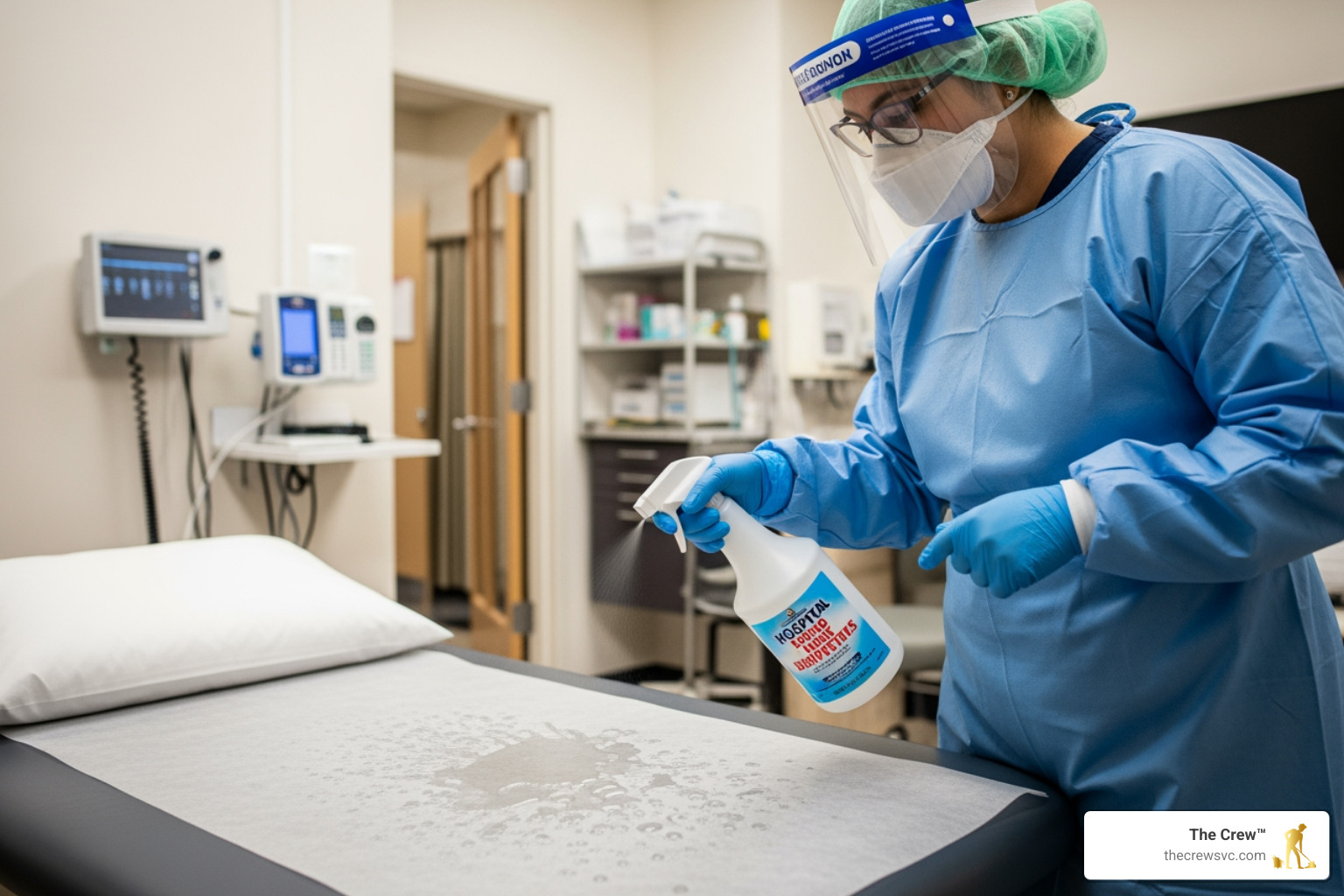
The Critical Role of Hospital-Grade Disinfectants
Not all cleaners are created equal. In a medical facility, “household strength” doesn’t cut it. We use hospital-grade disinfectants that have higher kill rates and are designed to handle viral inactivation and bacterial resistance.
The EPA approves these chemicals based on their ability to kill specific “hard-to-kill” pathogens. However, the most expensive chemical in the world is useless if applied incorrectly. Following the CDC guidelines on When and How to Clean and Disinfect a Facility is essential. This includes cleaning the surface first to remove organic load (dirt and grime) before applying the disinfectant, as dirt can actually shield bacteria from the chemical’s effects.
Medical vs. Standard Commercial Cleaning
The biggest difference between medical office cleaning and standard janitorial work is the “Why” and the “How.”
- Standard Cleaning: Focuses on appearance (shiny floors, dusted desks, emptied trash).
- Medical Cleaning: Focuses on infection prevention and regulatory rigor.
In a standard office, a microfiber cloth might be used to wipe several desks. In a medical office, that would be a disaster. Medical cleaning requires strict biohazard handling and a clear distinction between sanitization (reducing bacteria to safe levels) and disinfection (killing almost everything).
Navigating Regulatory Standards: OSHA, CDC, and EPA
Compliance isn’t just a buzzword; it’s a legal requirement that protects your practice from massive fines and lawsuits. Organizations like OSHA and the CDC have strict rules for how medical spaces must be maintained.
One of the most important regulations is the OSHA Bloodborne Pathogens Standard. This requires anyone cleaning a medical space to have specialized training on how to handle potential exposure to blood or other infectious materials. Furthermore, every chemical used must have a corresponding Safety Data Sheet (SDS) on-site, as required by the hazard communication standard 29 CFR 1910.1200.
Then there is HIPAA. While we think of HIPAA in terms of digital records, it also applies to janitorial staff. Cleaners must be trained never to look at patient charts left on desks and to ensure that trash containing sensitive information is handled according to HIPAA requirements.
Proper Biohazard and Medical Waste Disposal
Medical waste cannot go into the regular dumpster. OSHA requires that sharps (needles, scalpels) be placed in puncture-resistant, leak-proof containers. Other regulated waste—like blood-soaked gauze—must be placed in specifically labeled red bags.
Professional cleaners ensure these bags are never overfilled and are transported using methods that minimize the risk of leaks or spills. Improper disposal isn’t just a health risk; it’s a major compliance violation that can lead to heavy penalties from state health departments.
Maintaining Air Quality and HVAC Hygiene
Cleanliness isn’t just about what you can touch; it’s about what you breathe. Medical offices often host patients with respiratory issues or weakened immune systems. This is why we prioritize air quality.
Using HEPA-filter vacuums is a non-negotiable standard. These vacuums capture 99.97% of dust particles as small as 0.3 microns, preventing pathogens from being kicked back into the air during the cleaning process. At The Crew™, our About Us page highlights our commitment to using the best equipment to ensure a healthy environment for both your staff and patients. Regular air vent sanitization and HVAC filter changes are also critical to reducing allergens and airborne contaminants.
The Ultimate Medical Office Cleaning Checklist
To maintain a “surgeon’s scalpel” level of clean, you need a system. A random approach leads to missed spots and increased infection risks. We recommend breaking tasks down into daily, weekly, and monthly frequencies.
| Frequency | Task Area | Specific Actions |
|---|---|---|
| Daily | Exam Rooms | Disinfect tables, stools, and counters between patients; empty biohazard waste. |
| Daily | Waiting Room | Wipe down all high-touch surfaces (chairs, door handles); vacuum floors. |
| Daily | Restrooms | Sanitize all fixtures, toilets, and sinks; mop floors with hospital-grade disinfectant. |
| Weekly | Staff Areas | Deep clean breakroom appliances; disinfect keyboards, phones, and desks. |
| Weekly | Floors | Buff hard floors; edge-vacuum all carpets to remove hidden dust. |
| Monthly | Deep Maintenance | Clean air vents; steam clean upholstery; deep scrub grout lines in restrooms. |
| Monthly | Compliance | Review cleaning logs and Safety Data Sheets for updates. |
Daily Disinfection for High-Touch Surfaces in Medical Office Cleaning
High-touch surfaces are the primary “transit hubs” for germs. In a medical office, these include:
- Door handles and light switches: Touched hundreds of times a day.
- Reception counters: Where patients sign in and exchange paperwork.
- Patient chairs: Both in the waiting room and the exam room.
- Medical equipment: Stethoscopes, blood pressure cuffs, and monitor buttons.
During the height of the pandemic, we learned that COVID-19 Disinfecting: It’s Not Rocket Science, but it does require consistency. Disinfecting these areas multiple times a day is the only way to keep up with the constant influx of new pathogens.
Weekly and Monthly Preventative Maintenance
While daily cleaning keeps the germs at bay, weekly and monthly tasks prevent long-term buildup. This includes deep floor care to remove grime that mops might miss and upholstery steam cleaning for waiting room chairs. We also perform “terminal cleaning”—a deep, top-to-bottom disinfection of a room—typically after a known infectious patient has visited or as part of a regular deep-clean rotation.
Preventing Cross-Contamination in Medical Office Cleaning
The biggest nightmare in medical office cleaning is taking a germ from the restroom and accidentally wiping it onto an exam table. This is called cross-contamination, and it is entirely preventable with the right protocols.
We use a color-coded microfiber system to eliminate this risk:
- Red: For high-risk areas like toilets and urinals.
- Yellow: For restroom sinks and counters.
- Blue: For general areas like offices and lobbies.
- Green: For clinical areas and exam rooms.
By using separate tools for each zone, we ensure that bacteria stays where it belongs—in the trash. We also follow a “top-to-bottom” and “clean-to-dirty” sequence. We start with the cleanest areas and move toward the dirtiest, ensuring we don’t drag contaminants into sterile zones.

Specialized Equipment and Supplies
Beyond color-coding, we utilize “no-dip” flat mops. Traditional string mops and buckets just move dirty water around; flat mops ensure that only fresh cleaning solution touches your floor.
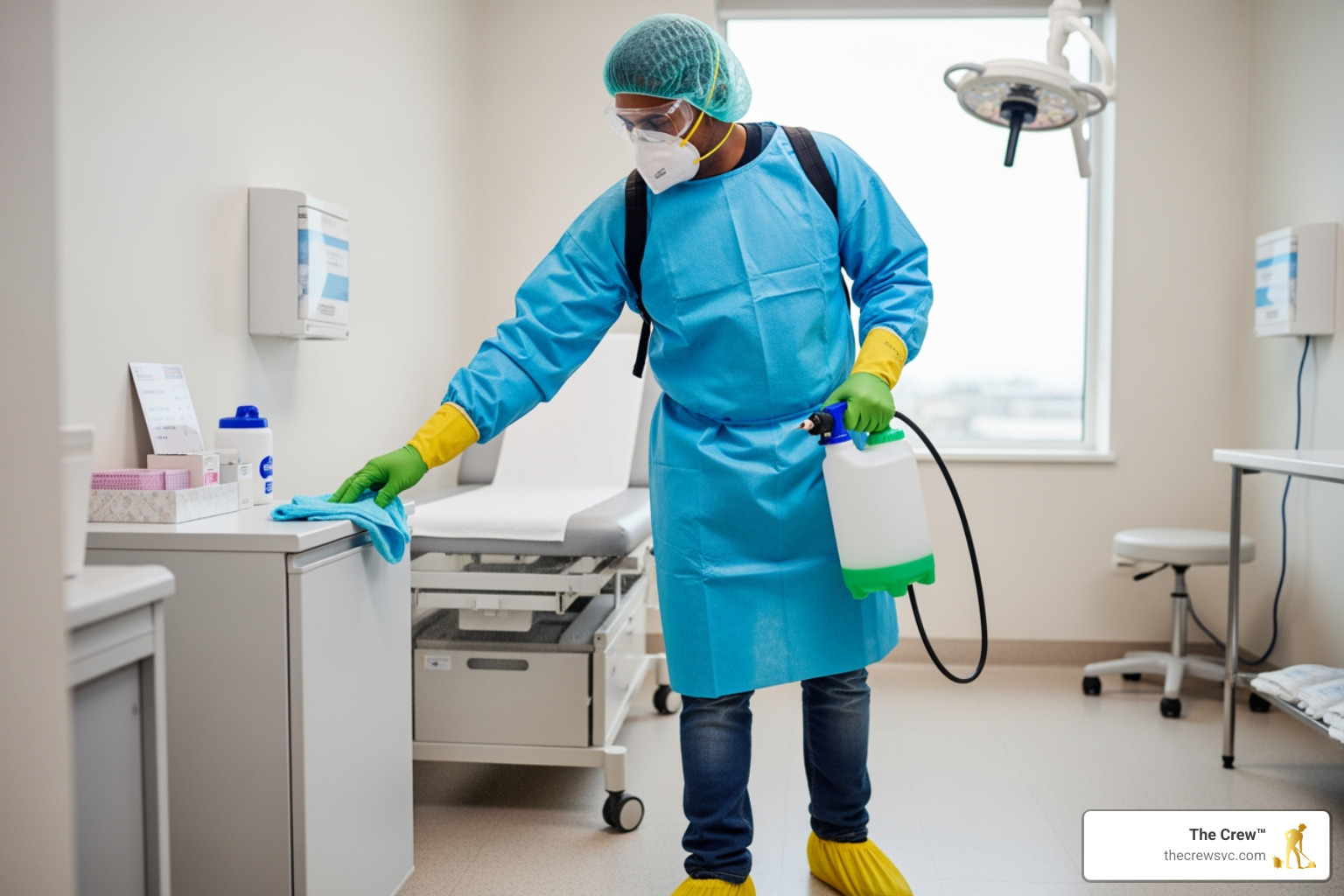
We also follow strict OSHA PPE Standards for our staff. This includes gloves, masks, and sometimes gowns or eye protection, depending on the task. This doesn’t just protect our cleaners; it prevents them from becoming carriers of germs between different parts of your facility. In some cases, we may use electrostatic spraying, but only as a supplement to manual cleaning, as the EPA notes it is not a replacement for physical scrubbing.
Common Mistakes to Avoid in Clinical Sanitation
Even well-meaning staff can make mistakes that compromise safety. Some of the most common errors include:
- Ignoring Dwell Time: Spraying and immediately wiping is just “cleaning,” not “disinfecting.”
- Using Household Cleaners: These often lack the “kill claims” necessary for a medical environment.
- Reusing Cloths: Using the same cloth for two different exam rooms is a recipe for an outbreak.
- Neglecting Waiting Room Toys: If your pediatric office has a toy area, these are essentially germ-magnets and must be disinfected daily or removed.
Professional vs. In-House: Dividing Responsibilities
Who should do the cleaning? It’s a common question. In most successful practices, there is a division of labor.
- In-House Staff: Your medical assistants or nurses should handle “point-of-care” cleaning. This includes wiping down the exam table and equipment immediately after a patient leaves. They are the experts on clinical safety in the moment.
- Professional Cleaners: We handle the “heavy lifting.” This includes the end-of-day disinfection, floor care, restroom sanitization, and deep cleaning.
Outsourcing to a professional service is often more cost-effective. When you factor in the time your high-paid medical staff spends cleaning, plus the cost of specialized equipment, chemicals, and PPE, a professional crew usually saves the practice money. Don’t just take our word for it; read these Testimonials from nursing directors who have seen the difference professional reliability makes.
Hiring a Professional Medical Office Cleaning Service
When looking for a partner, don’t just hire the cheapest bid. You need a company that understands the life-and-death stakes of your facility. At The Crew™, we take pride in our USP: we hire and retain top, background-checked cleaners and maintain a 0% turnover rate. This means the same trusted person who knows your facility’s specific needs will be there night after night.
Whether you need a daily porter or a nightly crew, our Services are designed to meet the rigorous standards of the Denver Metro Area’s medical community.
Frequently Asked Questions about Medical Cleaning
How often should exam rooms be disinfected?
Exam rooms should be “spot disinfected” (tables, chairs, counters) between every single patient. A full, thorough disinfection of all surfaces should occur at least once daily, usually at the end of the business day.
What is the difference between sanitizing and disinfecting?
Sanitizing lowers the number of germs on a surface to a safe level (as judged by public health standards). Disinfecting uses chemicals to kill almost all germs on a surface. In a medical office, disinfection is the standard for clinical areas.
Why is dwell time important for medical disinfectants?
Disinfectants aren’t magic; they are chemical reactions. They need time to break down the cell walls of bacteria or the protein coats of viruses. If you wipe the chemical off too early, some pathogens will survive and can even develop resistance.
Conclusion
At the end of the day, medical office cleaning is about one thing: patient safety. A clean clinic is a safe clinic, and it sends a powerful message to your patients that you care about every aspect of their well-being. By following OSHA, CDC, and EPA guidelines, and partnering with professionals who understand the nuances of healthcare sanitation, you can focus on what you do best—practicing medicine.
If you’re looking for a cleaning partner in the Denver Metro Area that offers background-checked professionals and consistent, 0% turnover reliability, we’re here to help. Let us take the burden of compliance and sanitation off your shoulders.
Get a professional medical office cleaning quote from The Crew™