
Why Commercial Restroom Cleaning Determines Your Business Reputation
Commercial restroom cleaning is one of the most critical — and most overlooked — maintenance tasks in any facility. Here’s what effective restroom sanitation looks like at a glance:
How to sanitize a commercial restroom effectively:
- Post “Closed for Cleaning” signage and put on PPE (gloves, goggles, mask)
- Remove trash and restock all dispensers
- Apply disinfectant to toilets, urinals, and sinks — let it dwell
- Scrub fixtures from top to bottom, cleanest to dirtiest area
- Wipe mirrors, countertops, and high-touch surfaces
- Sweep, then mop floors from the back wall toward the exit
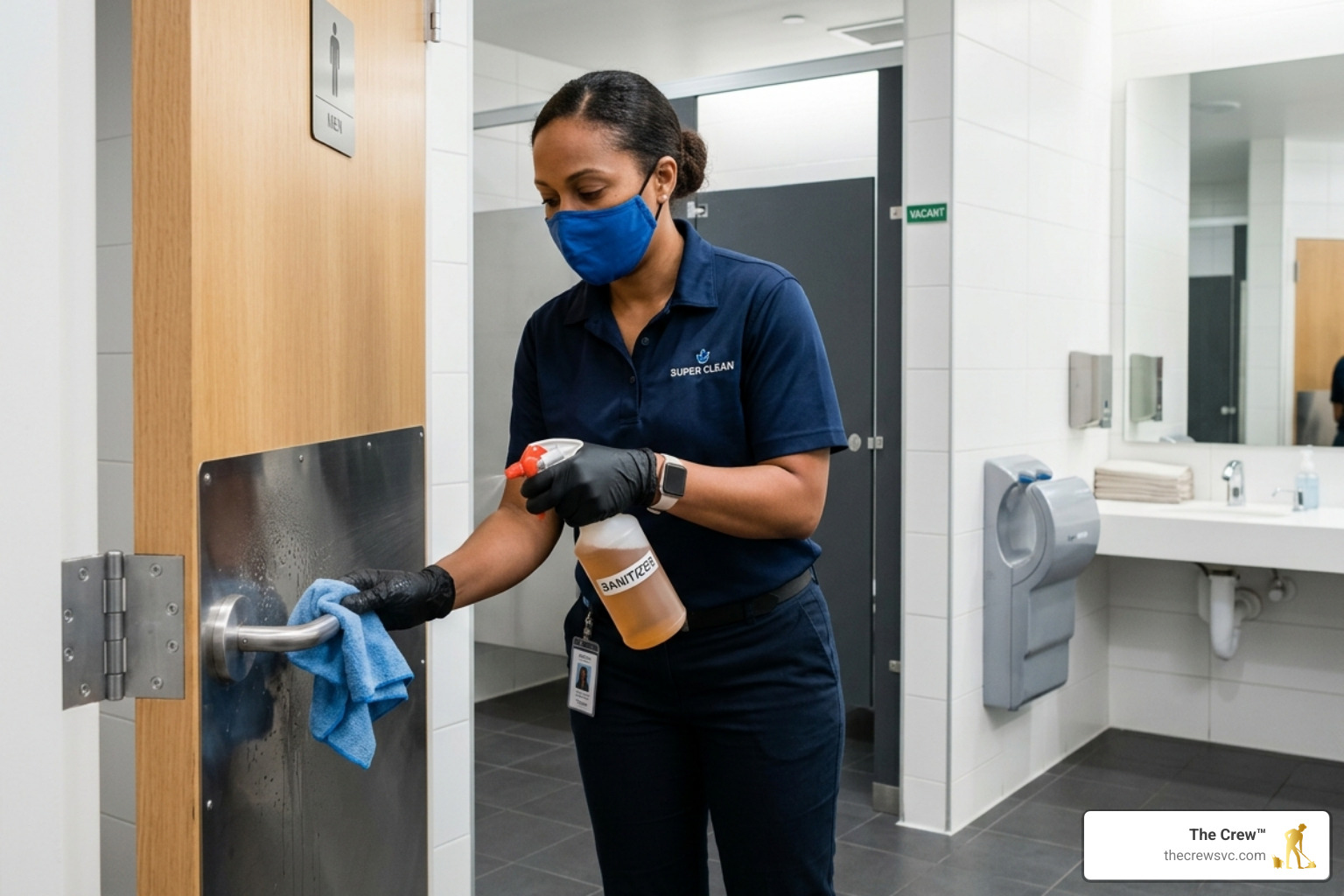
- Do a final inspection and disinfect the door handle on your way out
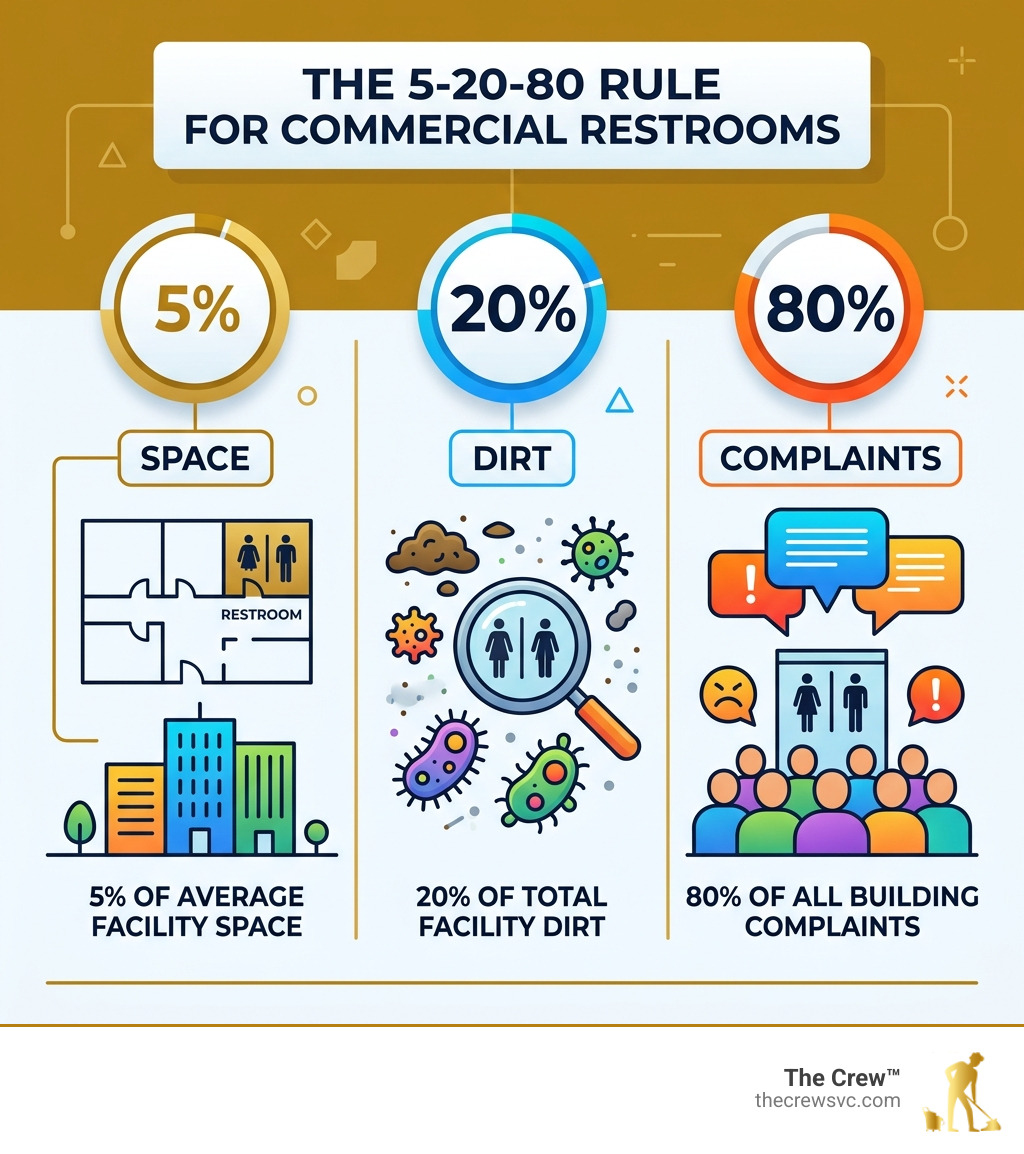
The numbers tell a stark story. Restrooms make up just 5% of the average commercial facility — yet they contain 20% of the dirt and generate 80% of all building complaints. And nearly 95% of consumers say they would avoid a business entirely after encountering a dirty restroom. That’s not a minor inconvenience. That’s lost revenue walking out the door.
A clean restroom doesn’t just pass inspection. It signals to every customer and employee that your business pays attention to the details that matter.
I’m Carlos Castillo II, owner of The Crew™ — a family-run commercial cleaning company serving the Denver Metro Area since 1982 — and commercial restroom cleaning is one of the core services my team delivers with consistent, reliable results. In this guide, I’ll walk you through exactly how to get it right.
Commercial restroom cleaning word roundup:
The Business Impact of Commercial Restroom Cleaning
In April 2026, the standard for public hygiene has never been higher. When a customer walks into your facility, they are subconsciously performing a “white glove test” the moment they open the restroom door. This isn’t just about aesthetics; it’s about psychology.
Research shows that 95% of consumers surveyed said they would avoid an establishment in the future if they found the restroom to be dirty. Think about that for a second. You could have the best product or service in Denver, but a single stray paper towel or a lingering odor can permanently sever a customer relationship. Furthermore, nearly 60% of Americans are more likely to patronize a business with well-maintained restrooms and are willing to spend more money there.
Beyond the front-of-house impact, there is the matter of workplace wellness. Restrooms are notorious hotspots for bacteria and viruses. In fact, they are often cited among the 6 Dirtiest Areas in an Office. When you prioritize commercial restroom cleaning, you aren’t just making things look pretty; you are actively reducing absenteeism. A sanitary environment prevents the spread of the flu, colds, and other pathogens, keeping your team productive and healthy.
Whether you are running a retail shop or trying to how to keep your clinic cleaner than a surgeon’s scalpel, the restroom is a direct reflection of your brand’s attention to detail. Neglect here signals a casual approach to business that can undermine your professional reputation.
Essential Tools and PPE for Commercial Restroom Cleaning
You wouldn’t try to fix a leaky pipe with a toothpick, and you shouldn’t try to master commercial restroom cleaning with household supplies. Professional results require professional-grade equipment.
A high-quality janitorial cart should be your mobile command center. It needs to be stocked with microfiber cloths, which are far superior to cotton rags because they trap more soil and bacteria. We recommend a color-coding system to prevent cross-contamination: red for toilets and urinals, yellow for sinks and counters, and blue for glass and mirrors.
Essential supplies include:
- EPA-registered hospital-grade disinfectants: These are non-negotiable for killing pathogens.
- HEPA-filtered vacuums: Great for removing dust from vents and corners before mopping.
- Microfiber mops: These use less water and chemical than traditional string mops.
- Odor neutralizers: Use these to eliminate smells at the source rather than just masking them with heavy perfumes.
- Glass cleaner: For streak-free mirrors.
For property managers, understanding these basics is part of Commercial Cleaning 101 for Property Managers. Without the right tools, your staff is just moving dirt around, which can lead to your office becoming a biohazard.
Essential PPE for Commercial Restroom Cleaning
Safety is our top priority. Cleaning chemicals and biological waste present real risks to your staff. Every cleaner should be equipped with:
- Nitrile gloves: To protect skin from harsh chemicals and germs.
- Safety goggles: To prevent splashes when scrubbing toilets or pouring chemicals.
- Slip-resistant footwear: Restroom floors are notoriously slippery when wet.
- Respiratory masks: Especially important when using spray-based chemicals or working in poorly ventilated areas.
We’ve learned through the years, especially during COVID-19 disinfecting, that PPE isn’t just a suggestion—it’s a requirement for a safe workplace.
Chemical Safety and Dwell Time
One of the most common mistakes in commercial restroom cleaning is “spray and wipe.” Disinfectants are not instant. Every chemical has a required “dwell time” (or contact time) — the amount of time it must remain wet on a surface to actually kill the germs listed on the label.
Always refer to the Safety Data Sheets (SDS) for proper dilution ratios and safety precautions. According to the Step-by-Step Restroom Cleaning Checklist for Businesses, failing to allow for proper dwell time means you’re essentially just cleaning the surface without actually sanitizing it.
Establishing a Commercial Restroom Cleaning Schedule
Consistency is the secret sauce of sanitation. You cannot wait for a restroom to “look dirty” before cleaning it. By then, the bacteria have already set up camp. Your schedule should be tailored to your building’s foot traffic. A high-traffic retail space might need a touch-up every two hours, while a small office might only need a deep clean once a day.
| Frequency | Task Description |
|---|---|
| Daily | Empty trash, restock paper/soap, disinfect high-touch surfaces, sweep/mop floors. |
| Weekly | Scrub partitions, clean mirrors/frames, dust vents, buff floors, deep clean drains. |
| Monthly | Deep scrub grout lines, wash walls, polish metal fixtures, inspect plumbing. |
For a comprehensive breakdown, you can refer to The Ultimate Commercial Restroom Cleaning Checklist. Keeping a strict schedule ensures that small issues don’t turn into expensive “rescue cleans.” This proactive approach is a cornerstone of janitorial cleaning services and why your office needs them. If you’re in the Denver area, you might also want to check out The Essential Denver Business Deep Clean Checklist to ensure your facility meets local standards.
Step-by-Step Commercial Restroom Cleaning Procedures
- Knock and Block: Always knock and announce yourself before entering. Place “Closed for Cleaning” or “Wet Floor” signs at the entrance.
- Trash Removal: Empty all receptacles and replace liners. Wipe down the exterior of the trash cans.
- Top-to-Bottom Dusting: Start high. Dust the tops of partitions, vents, and light fixtures. This ensures that any falling dust is cleaned up during the floor phase.
- Fixture Saturation: Apply your disinfectant to the toilets, urinals, and sinks. Let them sit for the required dwell time.
- Bowl Scrubbing: Use a toilet brush to scrub the inside of the bowls. Flush to rinse.
- Mirror Polishing: Use a microfiber cloth and glass cleaner to remove spots and streaks from mirrors and chrome fixtures.
- Floor Mopping: Sweep up loose debris. Mop the floor using a “figure-eight” motion, starting from the furthest corner and working toward the door.
- Final Inspection: Check for missed spots, ensure dispensers are full, and give the door handle one final wipe with disinfectant as you exit.
Safety Best Practices and Professional Standards
Safety isn’t just about the cleaner; it’s about the building occupants. A “Caution: Wet Floor” sign isn’t just a legal shield; it’s a vital communication tool.
To maintain professional standards, always focus on cross-contamination prevention. You should never use the same cloth on a toilet seat that you use on a sink faucet. This is where the color-coding we mentioned earlier becomes essential.
Proper ventilation is also key. If the restroom doesn’t have a window, ensure the exhaust fan is running to clear out chemical fumes and moisture. Following these protocols is why your office needs reliable commercial janitorial in the Denver area.
Many businesses find that the benefits of day porter cleaning services are well worth the investment. A day porter can provide “policing” throughout the day—checking for spills, restocking toilet paper, and keeping the space presentable between deep cleanings. Knowing how to spot high-quality office cleaners before you hire is the best way to ensure these standards are met every single day.
Frequently Asked Questions about Restroom Sanitation
How often should high-traffic restrooms be cleaned?
In high-traffic environments like schools, hospitals, or busy retail centers, restrooms should be inspected and spot-cleaned 2–3 times per day, with at least one full deep clean every 24 hours.
What is the difference between cleaning and sanitizing?
Cleaning is the physical removal of dirt, dust, and debris from a surface. Sanitizing (or disinfecting) involves using chemicals to kill the microscopic germs and bacteria that remain after the surface looks clean. You must clean a surface before you can effectively sanitize it.
How can we eliminate persistent restroom odors?
Odors usually come from bacteria living in porous surfaces like grout or deep inside floor drains. To eliminate them, use enzymatic cleaners that “eat” the organic matter causing the smell. Regular deep scrubbing of floor grout and ensuring floor drain traps are filled with water (to block sewer gases) will also help.
Conclusion
Mastering commercial restroom cleaning is a full-time commitment to excellence. It’s about more than just soap and water; it’s about protecting your brand, your employees, and your bottom line. At The Crew™, we’ve spent over four decades perfecting these processes in the Denver Metro Area.
What sets us apart? We don’t just send anyone into your building. We hire and retain top-tier, background-checked cleaners. Our secret is our 0% turnover rate—a rarity in the cleaning industry—which allows us to provide the consistent, reliable service you deserve. When you work with us, you get the same expert team every time, people who know your building and care about the results.
If you’re ready to elevate your facility’s hygiene, explore our Denver Commercial Cleaning options. We can help you choose a Denver janitorial company that doesn’t suck by showing you the difference that true professionalism makes.
Ready to see a cleaner office? Check out our full list of services and let us take the “dirty work” off your plate. Whether you need a daily day porter or a weekly deep clean, we have the experience to get it right, every single time.