
What Is Industrial Cleaning (And Why It Matters for Your Facility)
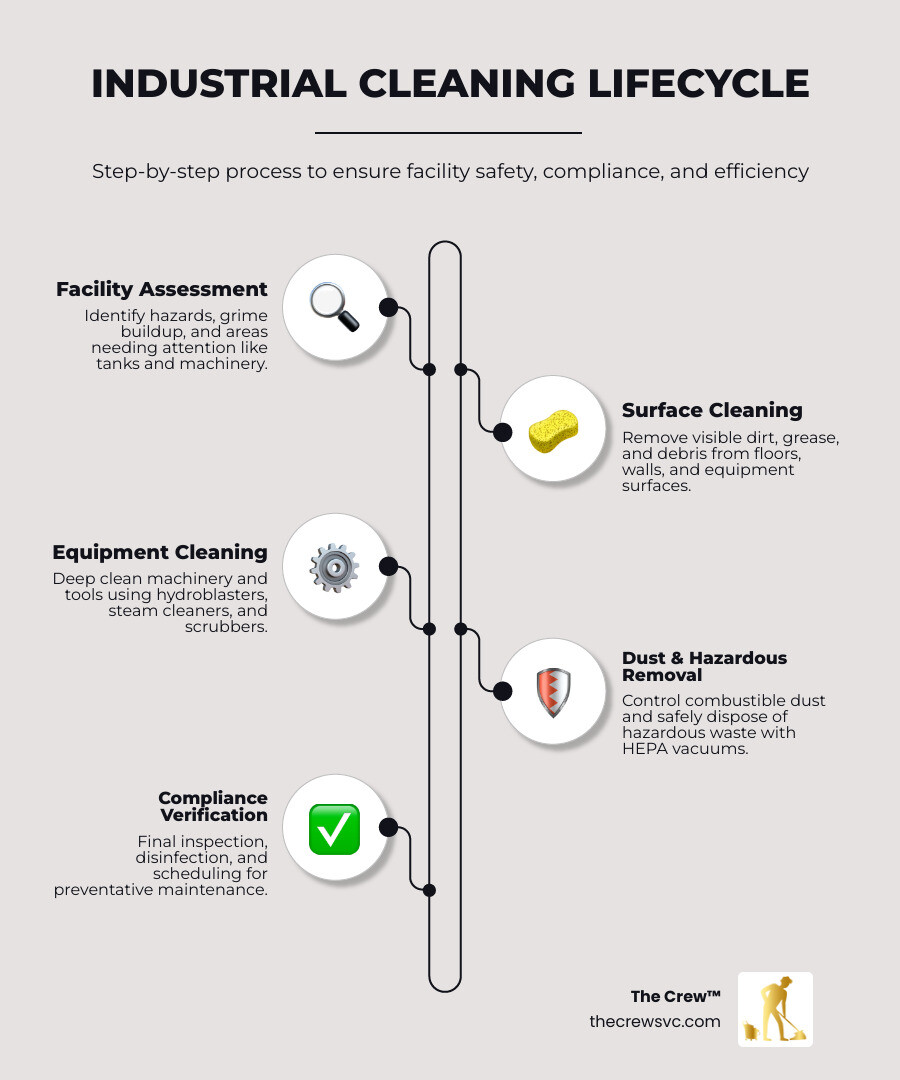
Industrial cleaning is the process of removing heavy grime, oil, hazardous waste, and chemical buildup from large-scale facilities like factories, warehouses, power plants, and pharmaceutical plants — using specialized equipment, trained personnel, and industrial-grade chemicals that go far beyond what standard cleaning services can handle.
Here’s a quick breakdown:
| Feature | Industrial Cleaning |
|---|---|
| Who it’s for | Factories, warehouses, power plants, distribution centers, pharmaceutical and food processing facilities |
| What it removes | Heavy grease, oil, chemical residue, hazardous waste, scale, mold, combustible dust |
| Who performs it | Specially trained professionals with certifications in hazardous material handling |
| Key tools used | Hydroblasters, HEPA vacuums, steam cleaners, floor scrubbers, dry ice blasters |
| Why it matters | Safety compliance, equipment longevity, operational efficiency, and regulatory adherence |
Industrial cleaning isn’t a luxury — it’s a necessity. Facilities that skip it risk equipment failure, safety violations, and costly downtime. Hidden buildup in out-of-sight areas can become breeding grounds for mold, pests, and dangerous pathogens that threaten both workers and operations.
I’m Carlos Castillo II, owner of The Crew™, a family-run commercial cleaning company serving the Denver Metro Area since 1982 — and industrial cleaning has been a core part of understanding what separates effective facility maintenance from surface-level tidying. In this guide, I’ll walk you through everything you need to know to keep your facility clean, compliant, and running at full capacity.
Defining Industrial Cleaning vs. Commercial Cleaning
To the untrained eye, cleaning is cleaning. But in the professional world, there is a massive gulf between wiping down a desk and de-scaling a 5,000-gallon chemical tank. We often get asked how industrial cleaning differs from the standard commercial or janitorial work people see in office buildings.
Commercial cleaning focuses on customer-facing or administrative environments—think retail stores, banks, and offices. It involves vacuuming carpets, cleaning windows, and sanitizing restrooms. While important, it doesn’t require the heavy-duty machinery or the high-level safety training needed for a factory floor.
Industrial cleaning, on the other hand, deals with the “heavy hitters.” We’re talking about the removal of thick grease, industrial lubricants, metal shavings, and chemical residues. These environments often contain hazardous materials that require specific disposal protocols to meet environmental laws. If a standard janitorial crew walked into a power plant, they wouldn’t just be out of their depth—they could be in physical danger. Industrial teams must understand confined space entry, lockout/tagout procedures, and how to handle specialized machinery without causing damage.
| Requirement | Commercial Cleaning | Industrial Cleaning |
|---|---|---|
| Primary Goal | Aesthetics and general hygiene | Safety, compliance, and machinery function |
| Typical Grime | Dust, fingerprints, food waste | Oil, chemicals, heavy metal dust, sludge |
| Equipment | Upright vacuums, mops, microfiber | Hydroblasters, ride-on scrubbers, hoists |
| Regulatory Focus | General health standards | OSHA, EPA, and industry-specific mandates |
Understanding these differences is vital when budgeting for your facility. If you’re curious about how these specialized needs impact your bottom line, you can find more info about janitorial prices to see how different service levels are structured.
Industrial Cleaning for Specialized Facilities
Not every industrial site is a “greasy factory.” The scope of industrial cleaning extends into highly controlled environments where even a microscopic speck of dust is a major problem.
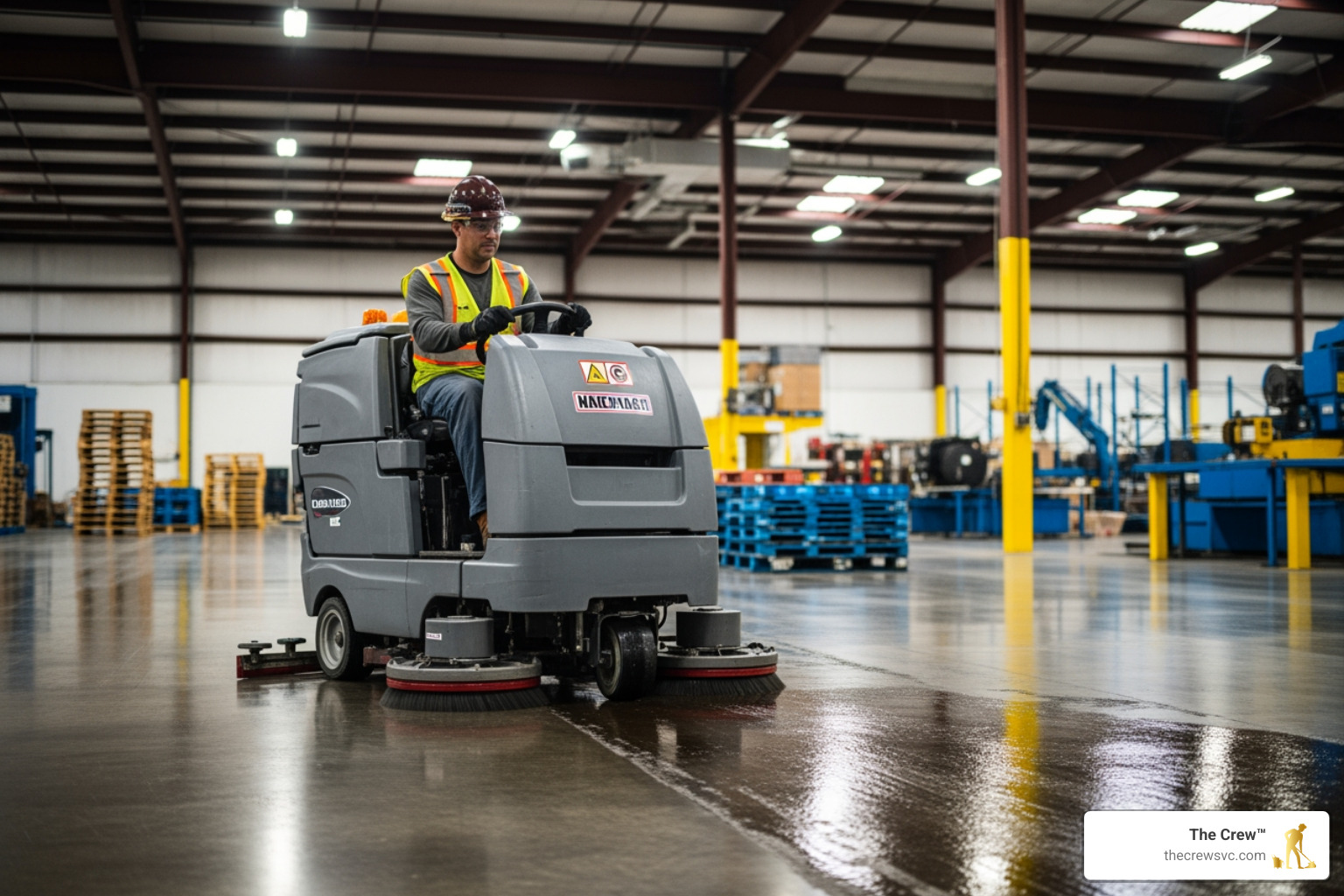
- Warehouses and Distribution Centers: These facilities face constant battles with “black dust” (tire dust from forklifts) and debris from shipping materials. Large floor spaces require high-speed ride-on scrubbers to maintain safety.
- Power Plants: These sites require meticulous cleaning of boilers and turbines. Buildup in these areas can lead to massive energy inefficiency or catastrophic failure.
- Pharmaceutical Labs: Here, the focus shifts to sterilization and cross-contamination prevention. Cleaning must often meet HIPAA or FDA-level cleanliness standards.
- Food Processing Plants: These facilities have strict hygiene requirements to prevent bacteria like Listeria or Salmonella. This often involves “Clean-in-Place” (CIP) methods where internal pipes and tanks are cleaned without dismantling the system.
In these high-traffic, high-stakes environments, certain spots always seem to collect the most grime. Check out more info about high-traffic areas to see which zones in your facility might be hiding the most dirt.
Essential Types of Industrial Cleaning Services
Because industrial facilities are so diverse, the services required are equally varied. We don’t just show up with a bucket and a mop; we come with a strategic plan for specific hazards.
Hydroblasting and Tank Cleaning
Hydroblasting uses ultra-high-pressure water jets—sometimes exceeding the bonding energy of the most stubborn scales and coatings—to strip surfaces clean without the use of harsh chemicals. Automated hydroblasting is a game-changer; it can cut project time by more than half while keeping operators at a safe distance from high-pressure lines. Regular tank cleaning is also essential to remove sludge and sediment that accumulates between batches, ensuring product purity.
Mold Remediation and Combustible Dust Removal
In many industrial settings, moisture and heat create the perfect breeding ground for mold. Industrial mold remediation involves containment, HEPA vacuuming, and antimicrobial treatments to ensure spores don’t spread through the HVAC system. Even more dangerous is combustible dust. Fine particles of sugar, flour, or metal can ignite with a single spark. Specialized “DEFA” foam processes can attract this dust like a magnet, bringing it safely to the floor for removal.
Emergency Spill Response and Decommissioning
Accidents happen. When a chemical spill occurs, professional industrial cleaners provide the rapid response needed to contain the hazard and minimize environmental impact. Additionally, when a plant is closing or moving, decommissioning services ensure the site is left “clean” according to environmental regulations, removing all traces of hazardous materials.
Maintaining these standards isn’t just about being tidy; it’s about staying on the right side of the law. Following OSHA safety standards is a mandatory part of any industrial operation, and professional cleaning is your first line of defense against fines and shutdowns. For those concerned about pathogens, you can find more info about disinfecting services to keep your workforce healthy.
Advanced Equipment and Specialized Chemicals
The “secret sauce” of industrial cleaning lies in the technology. We use tools that are light-years ahead of consumer-grade equipment.
- Industrial Vacuums and HEPA Filters: Standard vacuums just blow fine industrial dust back into the air. True industrial vacuums utilize HEPA filters that remove 99.97% of particles down to 0.3 microns. This is essential for air quality and preventing respiratory issues. At The Crew™, we like to say our vacuums suck but we don’t because we invest in the high-filtration tech that actually keeps the air clean.
- Dry Ice Blasting: This is a fascinating “soft” cleaning method. It uses recycled CO2 pellets that vaporize on contact. Because it’s non-abrasive and leaves no secondary waste, it’s perfect for cleaning sensitive electrical equipment or refrigeration units where water would freeze.
- Sponge Blasting: Similar to sandblasting but much gentler, sponge media can be recycled 6 to 10 times, making it an eco-friendly and cost-effective way to strip surfaces with low dust and rebound.
- Ride-On Floor Scrubbers: For warehouses with hundreds of thousands of square feet, walk-behind mops are useless. Large, battery-operated scrubbers use high-pressure brushes and specialized fluids to strip away forklift tire marks and oil spills in a single pass.
The Role of Industrial Chemicals
The chemicals we use are specifically formulated to break the molecular bonds of industrial grime.
- Degreasers: Alkaline-based cleaners that “eat” through heavy oils and lubricants.
- Descalers: Acidic solutions used to remove mineral deposits (scale) from pipes and boilers.
- Solvents: Used for dissolving paints, coatings, or heavy resins.
- Oxidizing Agents: Powerful disinfectants used in food and medical industrial settings to kill microorganisms instantly.
Maximizing Efficiency Through Industrial Cleaning
A clean facility is a productive facility. When dust and grime are allowed to build up, they infiltrate machine vents and cooling systems. This causes friction, which leads to overheating and eventual mechanical failure.
By implementing a regular industrial cleaning schedule, you are essentially performing preventative maintenance. It’s much cheaper to clean a machine than it is to replace a custom-engineered part that burned out due to dust clogs. Furthermore, an organized, clean workspace makes it significantly easier for your team to spot leaks or cracks during routine inspections. This is why many savvy facility managers choose to leave it to the pros rather than stretching their internal maintenance staff too thin.
The Business Impact of Regular Maintenance
Beyond the immediate “look” of a clean plant, the financial and operational benefits of industrial cleaning are measurable.
- Equipment Longevity: Regular removal of corrosive residues and abrasive dust can add years to the lifespan of your machinery. In the case of cooling equipment, specialized cleaning like “FINFOAM” ensures fans and coils perform at optimal levels, directly reducing energy costs.
- Regulatory Compliance: Whether it’s HIPAA regulations for medical production or EPA standards for waste disposal, professional cleaners ensure you have the documentation and cleanliness levels to pass any audit.
- Employee Morale and Safety: Slippery floors are the leading cause of industrial accidents. A clean floor is a safe floor. Moreover, workers are more productive and take more pride in their work when their environment isn’t covered in a layer of grime.
- Environmental Impact: Modern industrial cleaning focuses on sustainability. By using recyclable media (like sponge) and biodegradable degreasers, businesses can reduce their “environmental footprint” while still maintaining high standards of cleanliness.
Many facilities find that the benefits of day porter services—having a dedicated cleaner on-site during shift hours—helps manage small spills and dust accumulation before they become massive, expensive problems.
Frequently Asked Questions about Industrial Cleaning
How does industrial cleaning differ from janitorial services?
Janitorial services are typically daily, routine tasks like emptying trash, cleaning restrooms, and vacuuming offices. Industrial cleaning is a specialized, often project-based service that involves heavy-duty machinery, hazardous waste handling, and cleaning of production-line equipment that requires technical knowledge.
What are the most common chemicals used in industrial settings?
The “big three” are degreasers (for oil), descalers (for mineral buildup), and industrial solvents (for resins and coatings). We always recommend using biodegradable options whenever possible to minimize the environmental impact and ensure worker safety.
How do professional services ensure OSHA compliance?
Professional industrial cleaners are trained in OSHA-mandated safety protocols, including the use of Personal Protective Equipment (PPE), hazardous material communication (HazCom), and specific cleaning methods that mitigate risks like combustible dust explosions or slip-and-fall hazards.
Conclusion
Navigating industrial cleaning can feel overwhelming, but it doesn’t have to be. Whether you’re managing a sprawling distribution center or a high-precision manufacturing lab, the goal remains the same: a safe, efficient, and compliant environment.
At The Crew™, we’ve spent decades perfecting our approach to facility maintenance in the Denver Metro Area. We know that in an industrial setting, “good enough” isn’t good enough. That’s why we focus on hiring and retaining top, background-checked cleaners. Our 0% turnover rate means you get the same reliable, expert service every single time, from people who actually know your facility’s unique needs.
Don’t let grime and non-compliance slow your business down. It’s important to find top vetted cleaners who understand the stakes of your industry. If you’re ready to see the difference a professional team can make, reach out to us today to Get a Professional Cleaning Quote. Let’s keep your facility running at its absolute best.